
Skin Problems in Kidney Disease: When a Nephrologist Recommends a Dermatologist
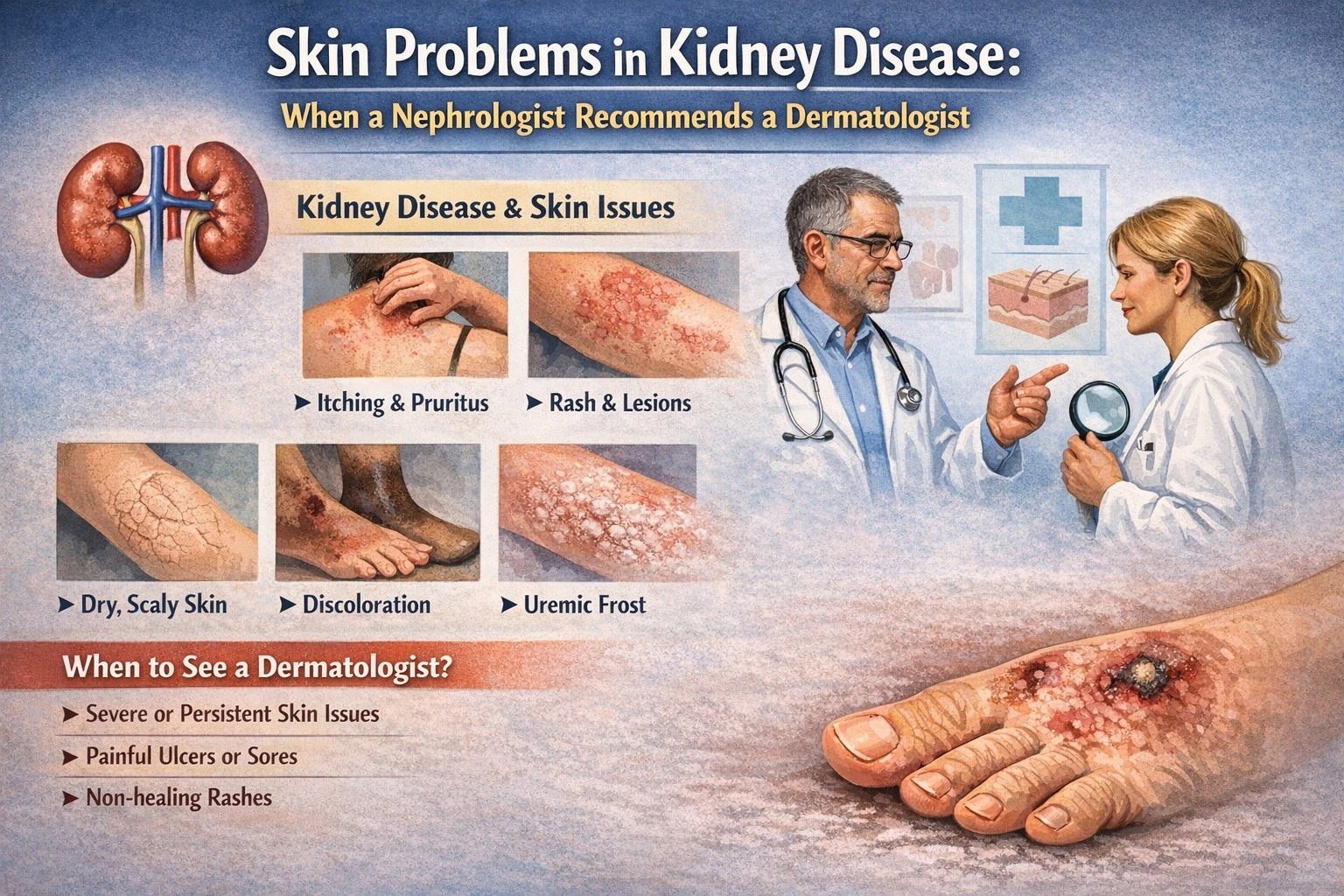
Kidney disease affects far more than just the kidneys. As these vital organs lose their ability to filter waste, regulate fluids, and maintain chemical balance, the effects are felt throughout the body. One of the most commonly affected—but often overlooked—organs is the skin.
For many patients with chronic kidney disease (CKD), skin problems are among the earliest and most persistent symptoms. From constant itching and dryness to pigmentation changes and infections, these skin issues can significantly impact comfort, sleep, mental health, and overall quality of life. This is why nephrologists frequently recommend dermatological consultation as part of comprehensive kidney care.
Understanding the connection between kidney disease and skin health helps patients recognize symptoms early and seek appropriate care before complications arise.
Why Kidney Disease Affects the Skin
Healthy kidneys remove toxins, regulate electrolytes, control fluid balance, and help maintain normal hormone levels. When kidney function declines, these processes are disrupted. As waste products accumulate in the bloodstream, they begin to affect multiple systems, including the skin.
Skin problems in kidney disease arise due to:
- Accumulation of metabolic waste products
- Imbalance of calcium, phosphorus, and other minerals
- Reduced sweat and oil gland function
- Chronic inflammation
- Weak immune response
- Nutritional deficiencies
- Side effects of dialysis and medications
Because the skin acts as a mirror of internal health, changes in kidney function often manifest visibly on the skin.
Common Skin Problems Seen in Kidney Disease
1. Severe and Persistent Itching (Uremic Pruritus)
One of the most distressing symptoms of kidney disease is persistent itching, medically known as uremic pruritus. This itching may be localized or generalized and often worsens at night.
Key features include:
- No obvious rash initially
- Constant urge to scratch
- Sleep disturbance
- Skin damage due to repeated scratching
Uremic pruritus is caused by toxin buildup, nerve changes, immune dysfunction, and mineral imbalance. Dermatologists help manage this condition using medicated moisturizers, antihistamines, topical therapies, and advanced treatments when needed.
2. Extremely Dry and Flaky Skin (Xerosis)
Dry skin is very common in patients with chronic kidney disease and those undergoing dialysis. Reduced activity of sweat and oil glands leads to rough, scaly, and cracked skin.
Dry skin can result in
- Painful fissures
- Increased itching
- Higher risk of infection
Dermatological care focuses on restoring the skin barrier using specialized emollients and avoiding irritants that worsen dryness.
3. Changes in Skin Color and Pigmentation
Kidney disease often causes noticeable pigmentation changes due to anemia, toxin accumulation, and hormonal imbalance.
Common pigmentation changes include:
- Pale or dull skin due to anemia
- Yellowish or grayish skin tone
- Darkening of sun-exposed areas
- Patchy hyperpigmentation
While many pigmentation changes are harmless, sudden or progressive discoloration should be evaluated to rule out complications.
4. Nail and Hair Abnormalities
Kidney disease affects keratin-producing structures such as hair and nails.
Common nail changes include:
- Brittle or ridged nails
- Half-and-half nails (white and brown bands)
- Nail discoloration
- Slow nail growth
Hair-related issues may include:
- Hair thinning
- Dry, brittle hair
- Hair loss
Dermatologists assess whether these changes are related to nutritional deficiencies, metabolic imbalance, or secondary conditions.
5. Increased Risk of Skin Infections
Patients with kidney disease have a weakened immune system, making them more susceptible to skin infections.
Common infections include:
- Fungal infections (especially in skin folds)
- Bacterial infections
- Viral skin conditions
Minor infections can quickly become severe if untreated. Early dermatological intervention prevents complications and hospitalizations.
6. Skin Changes in Dialysis Patients
Dialysis, while life-saving, introduces additional skin challenges.
Common dialysis-related skin problems include:
- Severe dryness
- Persistent itching
- Bruising due to blood thinners
- Infections at access sites
- Allergic reactions to dialysis materials
Nephrologists often work closely with dermatologists to manage these complications and improve patient comfort.
7. Calciphylaxis and Rare Skin Conditions
In advanced kidney disease, rare but serious skin conditions can develop, such as calciphylaxis. This condition causes painful skin ulcers due to calcium deposition in blood vessels and requires urgent medical attention.
Early recognition by dermatologists can be life-saving.
Help Is Here—Call Now!
Emotional and Psychological Impact of Skin Problems
Skin problems in kidney disease are not merely cosmetic. They can have a profound psychological impact.
Patients may experience:
- Anxiety and depression
- Sleep deprivation due to itching
- Social embarrassment
- Reduced self-confidence
- Emotional exhaustion
Addressing skin symptoms improves both physical comfort and mental well-being, reinforcing the importance of dermatological care.
When Does a Nephrologist Recommend a Dermatologist?
Nephrologists often recommend dermatological consultation when:
- Itching becomes severe or persistent
- Skin symptoms do not improve with basic care
- Recurrent skin infections occur
- Pigmentation changes worsen
- Nail or hair abnormalities affect daily life
- Skin lesions do not heal
- Dialysis-related skin issues interfere with treatment
Early referral prevents complications and improves overall disease management.
Role of Dermatologists in Kidney Disease Management
Dermatologists play a crucial role in managing kidney-related skin conditions by:
- Diagnosing the exact cause of skin symptoms
- Prescribing targeted topical or systemic treatments
- Preventing secondary infections
- Advising safe skincare routines
- Improving treatment adherence and comfort
For patients seeking specialized dermatological care, consulting an experienced dermatologist in Lucknow such as Dr. Pragati Gogia Jain can help effectively manage skin problems associated with kidney disease through personalized, evidence-based treatment.
Daily Skincare Tips for Kidney Patients
While medical treatment is essential, daily skincare habits significantly influence skin health.
Recommended practices include:
- Use mild, fragrance-free cleansers
- Moisturize immediately after bathing
- Avoid hot showers
- Wear loose, breathable clothing
- Protect skin from excessive sun exposure
- Avoid scratching and harsh scrubs
- Maintain proper hydration as advised by your nephrologist
Always consult your doctor or dermatologist before using new products.
Importance of a Multidisciplinary Approach
Kidney disease management is most effective when handled by a multidisciplinary team.
Collaboration between nephrologists and dermatologists ensures:
- Better symptom control
- Reduced complications
- Improved quality of life
- Holistic patient care
Skin health is a vital component of overall kidney disease management, not an afterthought.
Final Thoughts
Skin problems are a common and often underestimated part of kidney disease. From persistent itching and dryness to infections and pigmentation changes, these symptoms can significantly affect comfort, sleep, and emotional health.
Recognizing skin changes early and seeking timely dermatological care plays a crucial role in improving outcomes. When nephrologists and dermatologists work together, patients receive comprehensive care that addresses both internal disease and visible symptoms.
If you or a loved one with kidney disease experiences ongoing skin problems, do not ignore them. Early consultation with a dermatologist can greatly improve comfort, confidence, and quality of life.
Help Is Here—Call Now!