
Depression and Anxiety in Dialysis Patients: Causes, Symptoms & Treatment
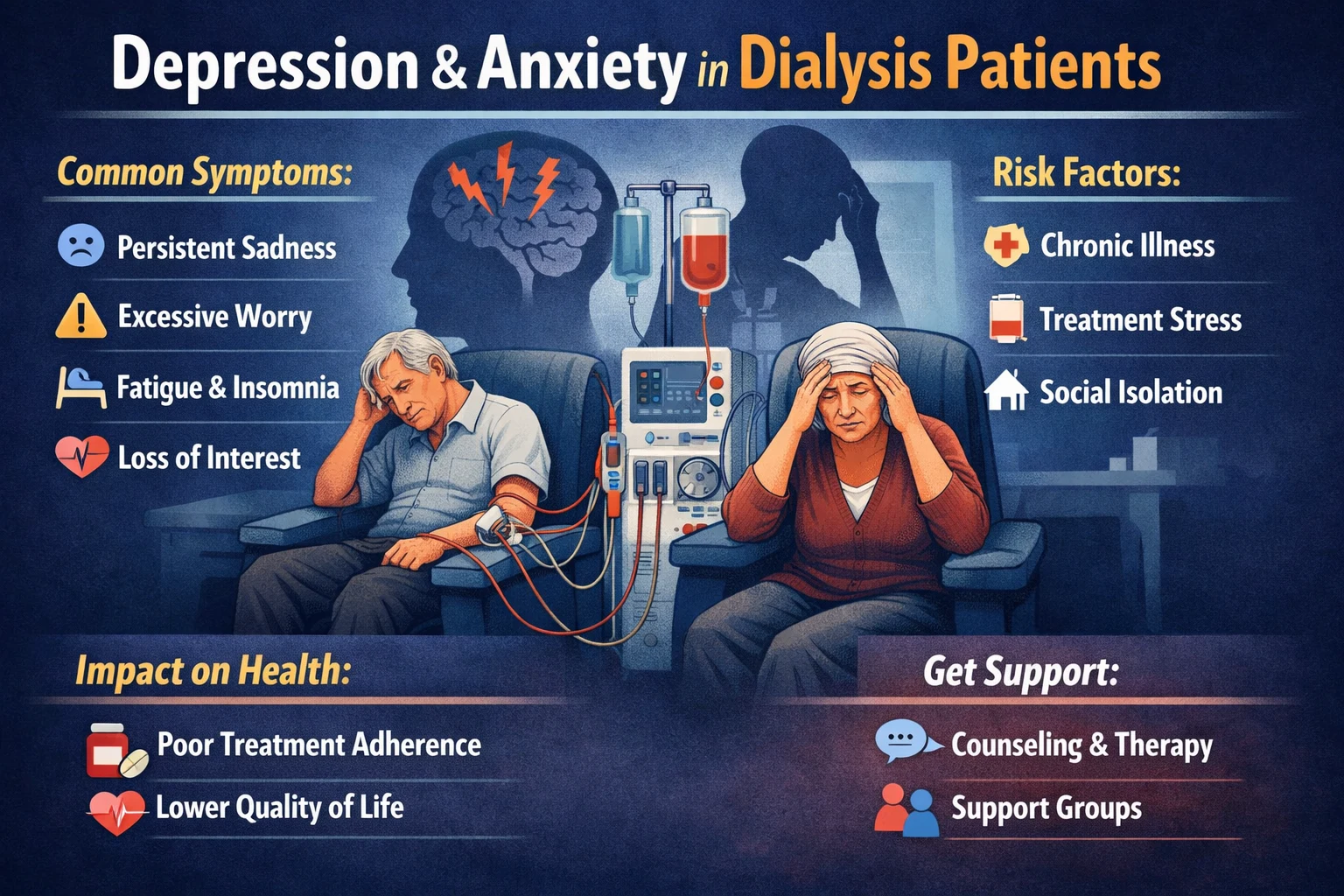
Living with kidney disease is not just a physical challenge—it is an emotional and mental one as well. For patients undergoing dialysis, life changes suddenly and deeply. Regular hospital visits, dietary restrictions, dependence on machines, financial stress, and uncertainty about the future can quietly affect the mind.
Many dialysis patients experience depression and anxiety, yet these conditions often go unnoticed or untreated because the focus remains on physical health. This article is written to help patients and families understand, recognize, and manage mental health issues during dialysis, in a simple, supportive, and patient-friendly way.
Understanding Dialysis and Emotional Health
Dialysis is a life-saving treatment for people whose kidneys are no longer able to filter waste and excess fluids from the body. While dialysis helps the body survive, it also brings:
- Long treatment hours (often multiple times a week)
- Physical fatigue and weakness
- Loss of independence
- Lifestyle and food restrictions
- Frequent medical appointments
Over time, these changes can affect a person’s emotional well-being. Feeling sad or worried occasionally is normal—but when these feelings persist, they may indicate depression or anxiety, which require attention just like any physical symptom.
What Is Depression in Dialysis Patients?
Depression is more than just feeling sad or low. It is a medical condition that affects thoughts, emotions, behavior, and even physical health.
In dialysis patients, depression can develop gradually and may be mistaken for “normal adjustment” to illness. However, untreated depression can reduce quality of life and even affect treatment outcomes.
Common Signs of Depression
A dialysis patient with depression may experience:
- Persistent sadness or emptiness
- Loss of interest in activities once enjoyed
- Feeling hopeless or helpless
- Excessive tiredness beyond usual dialysis fatigue
- Changes in sleep (too much or too little)
- Poor appetite or overeating
- Difficulty concentrating or making decisions
- Feelings of guilt or being a burden
- Thoughts like “What’s the point?” or “I can’t go on like this”
Not every patient shows all symptoms. Sometimes depression appears quietly—as silence, withdrawal, or lack of motivation.
What Is Anxiety in Dialysis Patients?
Anxiety is a constant state of worry, fear, or nervousness that feels difficult to control. Dialysis patients often live with uncertainty, which can fuel anxiety.
Common Causes of Anxiety During Dialysis
- Fear of complications or emergencies
- Worry about future health or survival
- Financial stress due to long-term treatment
- Fear of needles, machines, or procedures
- Concern about being dependent on others
- Sleep disturbances
Common Symptoms of Anxiety
Anxiety can show up in both mind and body:
Emotional symptoms:
- Constant worrying
- Feeling tense or restless
- Fear without a clear reason
- Irritability
Physical symptoms:
- Palpitations or fast heartbeat
- Sweating or trembling
- Shortness of breath
- Stomach discomfort
- Headaches
- Muscle tension
Some patients may experience panic attacks, sudden episodes of intense fear with physical symptoms that can feel like a heart attack.
Why Are Depression and Anxiety Common in Dialysis Patients?
There is no single reason. Mental health issues arise from a combination of physical, emotional, and social factors.
1. Biological Factors
- Toxin buildup in kidney failure affects brain function
- Electrolyte imbalances influence mood and cognition
- Anemia causes fatigue and low energy
- Hormonal changes impact emotional regulation
2. Psychological Factors
- Grief over loss of normal life
- Fear of death or disease progression
- Feeling trapped in a lifelong treatment routine
- Loss of independence and control
3. Social and Lifestyle Factors
- Reduced ability to work or socialize
- Financial pressure
- Dependence on family members
- Social isolation
All these factors together can overwhelm even the strongest individuals.
How Mental Health Affects Dialysis Outcomes
Depression and anxiety do not only affect emotions they also affect physical health.
Patients struggling mentally may:
- Skip dialysis sessions
- Ignore dietary or fluid restrictions
- Miss medications
- Avoid follow-up appointments
- Have poorer sleep and immunity
Studies show that untreated depression in dialysis patients is associated with:
- Poorer quality of life
- Higher hospitalization rates
- Worse overall health outcomes
This is why mental health care is an essential part of kidney treatment.
Recognizing the Warning Signs Early
Early recognition makes treatment easier and more effective.
Families and caregivers should watch for:
- Withdrawal from conversations
- Lack of interest in family or surroundings
- Excessive worry or fear
- Frequent crying or irritability
- Changes in eating or sleeping patterns
- Statements expressing hopelessness
If these signs persist for more than two weeks, professional help should be considered.
Treatment Options for Depression and Anxiety in Dialysis Patients
The good news is that depression and anxiety are treatable, even in patients undergoing dialysis.
1. Counseling and Psychotherapy
Talking to a trained mental health professional can help patients:
- Express fears and frustrations safely
- Learn coping strategies
- Manage stress and uncertainty
- Rebuild a sense of control
Common approaches include:
- Supportive counseling
- Cognitive Behavioral Therapy (CBT)
These therapies are safe and effective for dialysis patients.
2. Psychiatric Consultation
In moderate to severe cases, consulting a psychiatrist may be necessary. A psychiatrist can accurately diagnose depression or anxiety, prescribe medications when needed, and adjust treatment safely while considering kidney function. For patients seeking specialized mental health care, consulting an experienced psychiatrist such as Dr. Pranshu Agrawal,Psychiatrist in Lucknow, can help dialysis patients manage emotional distress and improve overall quality of life.
3. Medications (When Needed)
Antidepressants or anti-anxiety medications may be prescribed when:
- Symptoms are severe
- Daily functioning is affected
- Counseling alone is not enough
These medications:
- Do not cause addiction when used properly
- Are monitored closely
- Are adjusted based on dialysis schedules
Never start or stop psychiatric medicines without medical advice.
4. Family and Social Support
Emotional support from family plays a huge role in recovery.
Helpful actions include:
- Listening without judgment
- Avoiding statements like “Be strong” or “Don’t think negative”
- Encouraging open conversations
- Attending counseling sessions together if possible
Patients who feel supported recover faster and cope better.
5. Lifestyle Measures That Help Mental Health
Small daily habits can make a big difference:
- Maintaining a routine
- Light physical activity (as advised by doctor)
- Relaxation techniques (deep breathing, meditation)
- Adequate sleep
- Limiting isolation
- Engaging in hobbies within physical limits
Even small positive activities can improve mood over time.
Breaking the Stigma Around Mental Health
Many patients hesitate to talk about emotional problems due to fear, shame, or misunderstanding.
Important truth:
Depression and anxiety are not signs of weakness. They are medical conditions—just like diabetes or high blood pressure.
Seeking mental health care is a step toward strength and healing, not failure.
When to Seek Immediate Help
Urgent help is needed if a patient:
- Talks about self-harm or suicide
- Expresses extreme hopelessness
- Shows sudden personality changes
- Becomes severely withdrawn or confused
In such situations, contact a doctor or mental health professional immediately.
A Message to Dialysis Patients
If you are on dialysis and struggling emotionally, please remember:
- You are not alone
- Your feelings are valid
- Help is available
- Your mental health matters as much as your physical health
Talking about how you feel is the first step toward feeling better.
Final Thoughts
Depression and anxiety are common but often hidden challenges in dialysis patients. When recognized early and treated with compassion, counseling, medical support, and family involvement, patients can regain emotional balance and improve their quality of life.
Dialysis keeps the body alive—but mental health care helps patients truly live. If you or your loved one is undergoing dialysis, do not ignore emotional symptoms. Healing is not just about the kidneys—it is about the whole person.
Help Is Here—Call Now!